Umami: The “Delicious” Taste You’ve Been Missing (and Why It Matters)
February 20, 2026
If you’ve ever taken a bite of something and thought, “Wow… that’s just… satisfying,” you may have met umami—the savory, mouthwatering flavor that makes foods taste fuller, richer, and downright more craveable.
Umami literally translates to “delicious taste” (or “savory”), and it’s officially recognized as the fifth basic taste, right alongside sweet, sour, bitter, and salty.
So… what exactly is umami?
Umami is often described as brothy, meaty, or deeply savory. It was identified in 1908 by Japanese chemist Kikunae Ikeda, who linked the sensation to glutamate, an amino acid naturally found in many protein-rich foods.
Unlike salt or sugar, umami doesn’t hit you with a quick “punch.” It tends to linger, making your mouth water and leaving a long, satisfying finish. (Think: that “one more bite” feeling.)
Scientists consider a taste “basic” only when it meets strict criteria—like being distinct, producing a physiological response, and having dedicated taste receptors on the tongue. Umami earned its international scientific spotlight later, with receptors confirmed in the early 2000s.
Key Facts About Umami (aka: Flavor’s Secret Weapon)
1) The Source
Umami is triggered primarily by glutamate. Two other compounds can boost the effect:
-
Inosinate (often found in meats)
-
Guanylate (common in mushrooms)
Translation: some foods don’t just have umami—they team up to amplify it.
2) The Sensation
Umami is:
-
lingering
-
mouthwatering
-
tongue-coating
-
and subtly satisfying (it can even make food feel more “complete”)
3) Common Umami-Rich Foods
You’ve probably had plenty of these:
-
Parmesan and aged cheeses
-
Ripe tomatoes
-
Mushrooms
-
Soy sauce, miso
-
Seaweed
-
Worcestershire sauce
-
Cured meats
-
Fish and fermented fish
4) The Function
Umami isn’t meant to overpower. It’s the flavor that rounds out a dish, creating balance and richness.
Umami vs. MSG: What’s the Connection?
Let’s clear this up in plain English:
-
Umami = the taste sensation
-
MSG (Monosodium Glutamate) = a compound that triggers that sensation
MSG is the salt form of glutamic acid, meaning it’s basically concentrated umami—the same savory “signal” your tongue already recognizes from foods like tomatoes, cheese, and mushrooms.
Need More Umami in Your Life? Say Hello to Worcestershire.
If umami had a “Swiss Army knife” condiment, Worcestershire sauce would be it.
Pronounced WOOS-ter-sher in the U.S., this bold, complex sauce gets its depth from fermentation, including anchovies, and aging. It’s often described as a modern Western cousin to kê-tsiap—a fermented fish sauce that helped inspire sauces like ketchup.
It’s tangy. It’s savory. It’s a tiny splash of magic.
Easy Ways to Use Worcestershire (Umami Upgrade Included)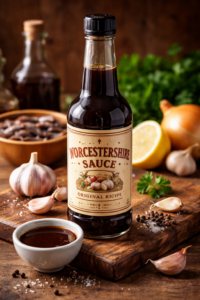
🍔 Meat Enhancer
-
Mix into ground beef for burgers, meatballs, or meatloaf
-
Brush onto steaks, pork chops, or roasted chicken for color + flavor
🥣 Soups & Stews
-
Add a dash to chili, beef stew, shepherd’s pie, or gravy
-
Instant “slow-simmered” vibes
🥗 Dressings & Sauces
-
Boost Caesar dressing, seafood sauces, BBQ sauce, or ketchup-based dips
🍹 Drinks (Yes, Drinks!)
-
Essential in Bloody Marys, Caesars, and Micheladas
-
Adds that savory backbone that makes people say, “What’s in this?”
🍳 Everyday “Just Try It” Moments
-
A few drops over eggs
-
Mixed into mashed potatoes
-
Over cheese on toast (trust me)
A Quick Insurance Agency Tie-In (Because We Can’t Help Ourselves)
Umami is the ingredient that makes everything feel complete. Insurance works a lot like that: it’s not flashy, but it adds confidence, balance, and peace of mind—so you can enjoy the good stuff without worrying about what-ifs.
If your life includes cookouts, hosting, or backyard hangouts, it might be a good moment to double-check that your coverage fits the lifestyle you’re actually living—especially liability and umbrella protection.