Earthquake Insurance: 5 Myths That Could Cost Homeowners Thousands
December 20, 2025
Most homeowners want the same thing from their insurance: peace of mind. But when it comes to earthquakes, peace of mind often gives way to misinformation—and that confusion can leave families financially exposed when they least expect it.
Western Washington sits near multiple fault zones, and while we can’t predict when an earthquake will happen, we can plan for how we’d recover afterward. That’s where earthquake insurance comes in.
Let’s clear up five common misconceptions we hear from homeowners—so you can make confident, informed decisions about protecting your home.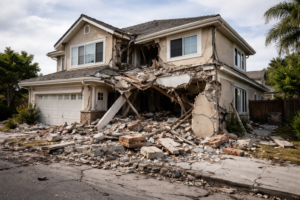
Myth #1: “My homeowners policy covers earthquake damage.”
This is one of the most common (and most expensive) misunderstandings.
Most standard homeowners’ insurance policies exclude earthquake/earth movement damage. That means damage from ground shaking—like cracked foundations, structural shifting, collapsed chimneys, or broken pipes due to movement—typically is not covered under a standard policy.
Important nuance: Some homeowners’ policies may cover certain “resulting” losses (for example, a fire that happens after an earthquake). But you don’t want your recovery plan to rely on exceptions or “maybes.” The direct earthquake damage—the kind that can make a home unsafe to live in—is usually covered only by earthquake insurance (either an endorsement or a separate policy, depending on the carrier).
Takeaway: If you want coverage for earthquake shaking and earth movement, you generally need a specific earthquake policy or endorsement.
Myth #2: “The federal government will bail me out.”
After a major disaster, help may be available—but it’s often misunderstood.
Federal assistance (when approved for an area) is typically designed to help with immediate, basic needs—not to restore your home to its pre-loss condition. And in many cases, assistance may come in the form of loans that must be repaid, not “free money” to rebuild.
Even when grants are available, they often don’t come close to the cost of:
-
foundation repairs
-
structural rebuilding
-
bringing a home back up to code
-
replacing major systems (electrical, plumbing, HVAC)
Takeaway: Disaster assistance can help you survive the short term. Insurance is what enables you to recover long-term.
Myth #3: “I’m not at risk for earthquake damage.”
A lot of homeowners assume, “It won’t happen here,” or “My neighborhood isn’t high-risk.”
In earthquake-prone regions, the risk isn’t limited to one city or one ZIP code. Even if you’re not right on top of a fault line, strong shaking can still cause costly damage—especially when you factor in:
-
soil type (some soils amplify shaking)
-
liquefaction potential (ground can lose strength and shift)
-
slope stability (landslides can follow quake activity)
-
home age and construction style (older homes may be more vulnerable)
And remember: earthquake damage isn’t only about a home “falling down.” It’s often the expensive, disruptive losses—foundation cracking, broken gas/water lines, interior damage, and loss of use—that hit homeowners hardest.
Takeaway: In Western Washington, it’s safer to assume “I could be affected” and plan accordingly.
Myth #4: “My home made it through other earthquakes just fine.”
We hear this one a lot, especially from long-time residents:
“We’ve felt quakes before and our house was fine.”
That may be true—and we’re glad. But it doesn’t tell the whole story.
Not all earthquakes are the same. Future quakes could be:
-
stronger
-
closer to your home
-
longer in duration
-
more damaging due to the type of ground beneath your home
Also, a home can experience “small” unseen impacts over time (minor foundation shifting, weakened masonry, stressed framing). The next event can exploit those weak points.
Takeaway: Past performance isn’t a guarantee of future outcome—especially with earthquakes.
Myth #5: “I can’t afford the deductible after a major loss.”
Earthquake deductibles are different than the flat deductibles most people are used to (like $1,000 or $2,500).
Many earthquake policies use a percentage-based deductible, often calculated from your dwelling coverage (Coverage A). That number can look scary at first glance—but it’s important to understand what it means.
In most cases, the earthquake deductible is the portion of the loss you’re responsible for, and the insurer pays the covered amount above that deductible. You typically don’t write a check to the insurance company for the deductible. Instead, you pay the first part of the repair costs, and the claim payment reflects the deductible.
Simple example (easy math):
-
Dwelling coverage: $500,000
-
Earthquake deductible: 15%
-
Deductible amount: $75,000 (because 15% of $500,000 = $75,000)
-
Covered earthquake damage: $200,000
-
Insurer pays: $125,000 (because $200,000 − $75,000 = $125,000)
-
Your share: $75,000
Takeaway: The deductible is your share of the loss. The goal is to choose a deductible you could realistically handle—rather than having no earthquake coverage at all.
What earthquake insurance can help with
Coverage varies by carrier and policy, but earthquake insurance commonly helps with:
-
Dwelling repairs (foundation, structure, attached structures)
-
Personal property (contents coverage may be included or optional)
-
Loss of use (if your home is unlivable during repairs)
-
Debris removal (important after structural damage)
-
Sometimes code upgrade coverage (optional/limited, policy dependent)
This is why a quick conversation with your agent matters: we can walk through what’s included, what’s limited, and what options make sense for your home and budget.
How to decide if earthquake insurance is right for you
A few practical questions homeowners can ask:
-
If my home had significant structural damage, could I afford repairs without insurance?
-
Could I keep paying my mortgage while also paying for temporary housing?
-
Do I have enough emergency savings to handle a large deductible?
-
Would I be okay with rebuilding slower—or not rebuilding at all—without coverage?
If any of those questions give you pause, it’s worth exploring options.
Bottom line: The risk is real—and so are the solutions
Earthquakes are unpredictable. But your financial recovery doesn’t have to be.
If you’d like, we can run a quick review and show:
-
available earthquake coverage options
-
deductible choices
-
what your current homeowners’ policy does (and doesn’t) cover
-
realistic scenarios for your home’s replacement cost and risk tolerance
Want a no-pressure review? Reply to this email or give our office a call, and we’ll walk through it together.
Insurance coverages, deductibles, and availability vary by policy and carrier. This article is for educational purposes and doesn’t change or replace policy language.